












دليل الاختيار
PLD905-25W-P vs SPL PL90: two 25 W class 905 nm pulsed laser diodes
A datasheet comparison of PLD905-25W-P and SPL PL90 covering power definitions, emitter geometry, drive current, voltage, test conditions and substitution limits.
حُدِّث 2026-11-16 · 3 دقائق قراءة
PLD905-25W-P and OSRAM SPL PL90 are both 905 nm short-pulse emitters in plastic packages, but the shared 25 W class label does not make them interchangeable. Their emitter structures, geometry, electrical operating points and datasheet conditions differ.
PLD905-25W-P is marketed as a 25 W part, while its characteristic table lists 29 W typical and 32.8 W maximum. SPL PL90 lists 25 W typical and 30 W maximum. Values taken under different conditions cannot be treated as a same-condition performance comparison.
Product: PLD905-25W-P.
Key comparison
| Parameter | PLD905-25W-P | SPL PL90 |
|---|---|---|
| Wavelength | 905 nm, 895-915 nm | 905 nm, 895-915 nm |
| Spectral width | 7 nm FWHM typical | 7 nm FWHM typical |
| Power definition | 25 W name; table 23.9 min / 29 typ / 32.8 max | 20 min / 25 typ / 30 max |
| Emitter | 70 x 10 um | 200 x 2 um |
| Divergence FWHM | 9 x 25 degrees typical | 11 x 25 degrees |
| Threshold current | 0.75 A typical | 0.75 A typical |
| Operating current | 11 A, 9-13 A | 30 A |
| Operating voltage | 9.4 V, 8.8-10 V | 4.3 V, 3.3-5.3 V |
| Standard repetition | 3 kHz | 1 kHz |
| Maximum pulse width / duty | 100 ns / 0.1% | 100 ns / 0.1% |
| Wavelength drift | 0.28 nm/K | 0.28 nm/K |
Emitter geometry
PLD905-25W-P uses three epitaxial stacked emitters and a 70 x 10 um emitting area. SPL PL90 uses a large optical cavity and a roughly 200 um lateral aperture. Those descriptions cannot be ranked by name alone.
The geometric products are about 700 um2 and 400 um2, but this is not effective emitting area and does not determine the final target spot. Collimation, far-field distribution, distance and alignment also matter. Use the spot-at-distance calculator for a first estimate.
Driver differences
PLD905-25W-P operates near 11 A and 9.4 V typical; SPL PL90 operates near 30 A and 4.3 V. A common driver is therefore not assumed:
- PLD needs higher compliance voltage and lower current.
- SPL needs lower voltage and higher pulse current.
- Loop inductance, switch voltage rating, connector drop and pulse probe bandwidth must be rechecked.
- The 1 kHz and 3 kHz reference conditions must be harmonised before comparing power and heating.
The product of typical current and voltage is only a scale check, not an efficiency measurement. Use the peak-power and average-power calculators to connect pulse width, energy and repetition rate.
Application fit
PLD905-25W-P lists handheld ranging, golf, hunting, construction measurement, UAV ranging/obstacle sensing and professional laser sensors. SPL PL90 lists range finding, security, illumination/ignition and test and measurement.
Application descriptions do not certify a finished product. Start with the LiDAR link-budget calculator, then include receiver sensitivity, target reflectance and ambient light.
Replacement checks
- Clarify the 25 W name, 29 W typical value and guaranteed procurement range.
- Compare current mechanical drawings, pin polarity, lead frame and emitter position.
- Measure optical power under identical pulse width, repetition, temperature and current.
- Measure voltage, current, edges, overshoot and reverse spikes on the real driver.
- Validate both axes of the far field and the collimated target-plane spot.
- Test power drift and life across temperature and repetition rate.
- Re-run complete-product laser-safety classification.
Conclusion: wavelength, spectral width, threshold current and temperature range are similar, but electrical operating points, emitter geometry and application fit differ. The PLD power definition must be clarified and a same-condition A/B test is required before substitution.
المنتجات
منتجات ذات صلة
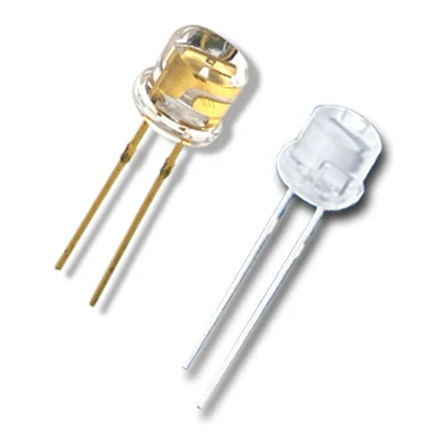 عبوة بلاستيكية مصبوبة
الحاسبات
احسب بصحيفة البيانات هذه
كل حاسبة أدناه تُفتح وقيم صحيفة بيانات هذه القطعة معبَّأة مسبقًا، بالوحدات التي تطلبها الحقول.
قدرة النبضة الذروية
حاسبة هندسية لحساب قدرة النبضة الذروية وتقييم أثر المدخلات على النتيجة.
قدرة الذروة 25 W · طاقة النبضة 0.0025 mJ · عرض النبضة 100 ns أساسيات الليزردورة التشغيل والحمل الحراري
حاسبة هندسية لحساب دورة التشغيل والحمل الحراري وتقييم أثر المدخلات على النتيجة.
دورة التشغيل 0.1 % · عرض النبضة 100 ns · معدل التكرار 10 kHz أساسيات الليزرالقدرة المتوسطة
حاسبة هندسية لحساب القدرة المتوسطة وتقييم أثر المدخلات على النتيجة.
الطاقة لكل نبضة 0.0025 mJ · معدل التكرار 10 kHz أساسيات الليزرحجم البقعة عند المسافة z
حاسبة هندسية لحساب حجم البقعة عند المسافة z وتقييم أثر المدخلات على النتيجة.
قياس المدى وLiDARميزانية وصلة LiDAR
حاسبة هندسية لحساب ميزانية وصلة LiDAR وتقييم أثر المدخلات على النتيجة.
قراءات ذات صلة
ليزر ألياف متعددة الوضع موحد بقدرة 785 نانومتر: إضاءة متجانسة، بصريات محطة شاملة وحدود التحقق
دليل عملي لاستخدام ليزر ألياف موحدة بقدرة 785 نانومتر و90 مللي واط وقطر 200/340 ميكرومتر، يغطي انتظام الإضاءة، البصريات المساعدة لمحطة شاملة، حسابات القدرة والقياس.
البصريات905 نانومتر رامان DTS: تقرير تنفيذ الهندسة والتحقق
مسار هندسي كامل من مضخة نابضة 905 نانومتر وقنوات رامان تقريباً 870/943 نانومتر عبر APD مزدوج، الالتقاط المتزامن، تصحيح الفقد التفاضلي، انقلاب درجة الحرارة، المعايرة والتحقق من النموذج الأولي.
دليل الاختيار905 nm أم 1535 nm أم 1550 nm: اختيار الطول الموجي للقياس بالليزر والليدار
قرار الطول الموجي يحدّد الكاشف، وفئة أمان العين، وأقصى طاقة مسموح بها، والأداء في الأحوال الجوية. إليك مقارنة عملية بين النطاقات الثلاثة لعمل القياس بالليزر.