Selection guide
PLD905-75W-P vs OSRAM SPL PL90_3 (Q62702P5353): 905 nm 75 W pulsed laser diode comparison
A datasheet-based comparison of PLD905-75W-P and OSRAM SPL PL90_3, order code Q62702P5353, covering optical ratings, voltage, current, pulse conditions, plastic package and replacement verification.
Updated 2026-10-21 · 3 min read
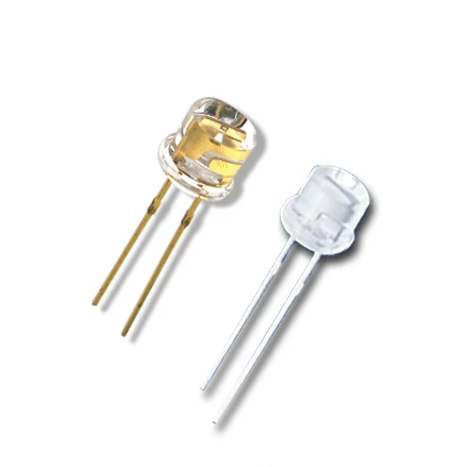
PLD905-75W-P and OSRAM SPL PL90_3 at a glance
This page compares PLD905-75W-P with OSRAM SPL PL90_3, order code Q62702P5353. The OSRAM part number is also frequently written as OSRAM SPL PL90 3 or simply SPL PL90_3. Both devices are presented in their supplied datasheets as 905 nm, 75 W peak-power pulsed laser diodes with a three-emitter stack and a 200 x 10 um emission area.
The important engineering point is that similar optical headline figures do not make the parts electrical drop-in replacements. The supplied PLD905-75W-P datasheet specifies a much higher operating voltage than the OSRAM SPL PL90_3 datasheet. Driver compatibility, pulse conditions and current limits must be checked before substitution.
| Parameter | PLD905-75W-P | OSRAM SPL PL90_3 / Q62702P5353 |
|---|---|---|
| Peak wavelength | 905 nm typ. (895 to 915 nm) | 905 nm typ. (895 to 915 nm) |
| Peak optical power | 65 W min. / 75 W typ. / 80 W max. | 65 W min. / 75 W typ. / 85 W max. |
| Emitter structure | 3-stack | 3-stack |
| Emission area | 200 x 10 um | 200 x 10 um |
| Operating voltage | 15.2 V min. / 16.8 V typ. / 17.2 V max. | 8 V min. / 9 V typ. / 11 V max. |
| Datasheet test condition | 100 ns, 3 kHz, 30 A, 25 C | 100 ns, 1 kHz, 30 A, 25 C |
| Package | Plastic package, gold or silver carrier variants | Plastic package |
Read the full PLD905-75W-P product page for the catalogue parameters and source document.
Why the models are not direct substitutes
The typical operating voltage is approximately 16.8 V for PLD905-75W-P and 9 V for OSRAM SPL PL90_3. A driver designed around the lower-voltage part may not supply the compliance voltage required by PLD905-75W-P. The current and peak-power limits also differ, so the pulse generator, current monitor, protection network and thermal design must be validated together.
The datasheets use different repetition rates in their headline test conditions, 3 kHz for PLD905-75W-P and 1 kHz for OSRAM SPL PL90_3. Do not compare only the 75 W number. Confirm optical power, pulse shape, wavelength, rise time and temperature rise under the pulse width and duty cycle that your product actually uses.
Replacement validation checklist
- Confirm the current version of both datasheets and the exact order code, including Q62702P5353.
- Check package dimensions, carrier material, emission window and pin assignment.
- Verify driver voltage headroom at the intended 30 A pulse and operating temperature.
- Measure peak power, spectrum, divergence, pulse response and case temperature on samples.
- Qualify the complete optical and electrical assembly, not only the laser diode.
For the broader selection method, see how to choose a 905 nm pulsed laser diode.
Supply and engineering support
PLD905-75W-P is available with gold or silver carrier variants according to the part configuration. Sample, pilot and production quantities can be discussed directly with the application engineer. Final availability, lead time, optical data and pin compatibility must be confirmed for the requested configuration.
Common search questions
Is PLD905-75W-P a direct replacement for OSRAM SPL PL90_3 Q62702P5353? No. The optical overview is similar, but the electrical limits and test conditions differ and require validation.
Is OSRAM SPL PL90 3 the same search term as SPL PL90_3? Yes. This article uses both spellings so engineers can find the comparison when the underscore is omitted.
Source and disclaimer
The comparison is based on the supplied PLD905-75W-P specification and OSRAM SPL PL90_3 datasheet version 1.5 dated 2015-11-20. Parameters are reproduced as published; missing values are not inferred. This article is not a statement of pin compatibility or authorization to substitute one manufacturer's part for another.
Products
Related products
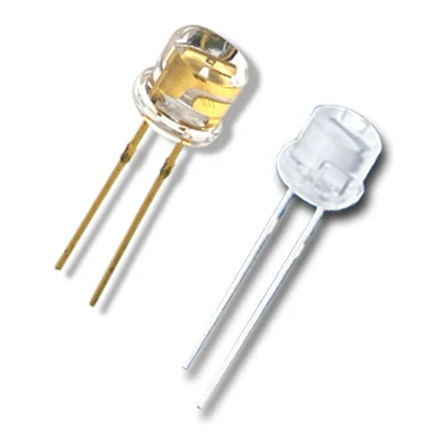 Moulded-plastic package
PLD905-75W-P
75 W peak, 905 nm, uncollimated
Calculators
Calculate with this datasheet
Each calculator below opens with this part's datasheet numbers already filled in, in the units the fields ask for.
Transmitter Pulse Parameters
Pulse energy, average power and duty cycle from datasheet peak power, pulse width and repetition rate, for 905 nm PLD and 1535 nm erbium-glass transmitter selection.
Pulse energy 7.5 μJ · Peak power 75 W · Pulse width 100 ns · Repetition rate 10 kHz · Duty cycle 0.1 % Laser FundamentalsPulse Peak Power
Instantaneous peak power from pulse energy and pulse width.
Peak power 75 W · Pulse energy 0.0075 mJ · Pulse width 100 ns Pulses & EnergyDuty Cycle
Ratio of laser on-time to the full period.
Duty cycle 0.1 % · Pulse width 100 ns · Repetition rate 10 kHz · Repetition rate (Hz) 10000 Hz Beam & OpticsSpot Size vs Distance
Beam size at a given distance, from the divergence angle.
Fast-axis divergence (FA) 25 deg · Slow-axis divergence (SA) 9 deg · Fast-axis divergence (FA) 436.332 mrad · Slow-axis divergence (SA) 157.08 mrad · Source fast-axis width 10 μm · Source slow-axis width 200 μm Ranging & LiDARLiDAR Link Budget
Estimate the optical power captured at the receiver.
Related reading
905 nm vs 1535 nm vs 1550 nm: choosing a wavelength for ranging and LiDAR
The wavelength decision sets your detector, your eye-safety class, your maximum usable energy and your weather performance. Here is how the three bands actually compare for ranging work.
DetectorsChoosing the receive side: avalanche photodiodes vs PIN photodiodes
Most of a ranging link's margin is recovered at the receiver, not the transmitter. Here is when an APD earns its 10x price, how gain and noise trade off, and what the specification numbers actually mean.
Selection guideHow to choose a 905 nm pulsed laser diode: from range target to part number
A repeatable procedure for turning a range requirement into pulse energy, pulse energy into peak power and pulse width, and peak power into the smallest package that survives your duty cycle.